
Donna, Donna, Donnas
Making new friends

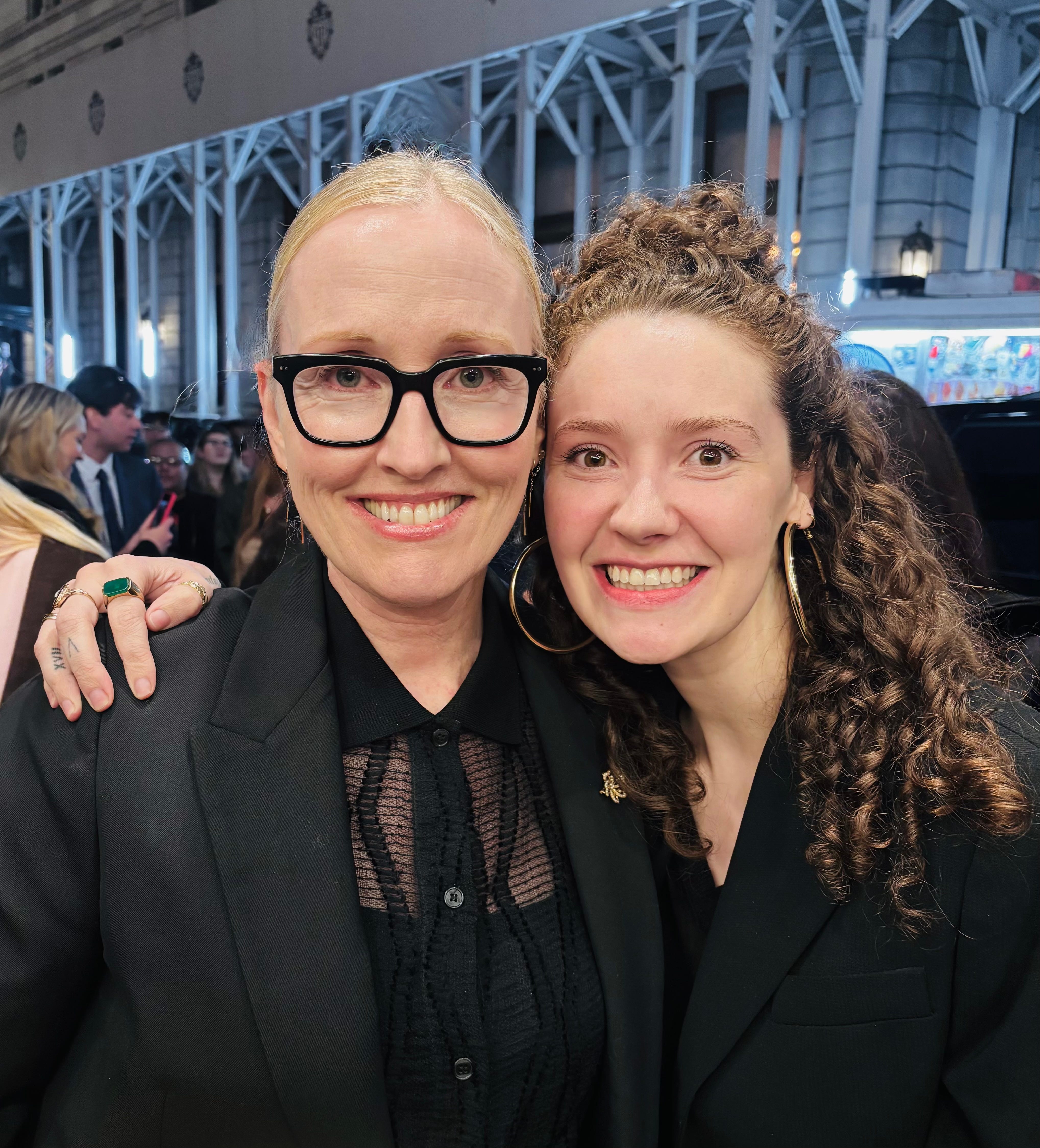
Two nights ago, I met a young woman named Maddy. My husband and I were at a premiere of a film he worked on, composing its gorgeous score. We were chatting, devouring our free popcorn before the movie started, when a young woman with a face all lit up and hair like a Jane Austen novel turned around. She reached her hand out and told me she was a huge fan. She was excited and moved, almost teary, to report how much the show has meant to her.
“I was homeschooled,” she said, smiling, her intelligence and a kind of sweetness all over the place. “The only show I was allowed to watch was The West Wing,” she said, knowing that it was kind of kooky. How funny, how cute she was. She is a stranger, so very young, and yet somehow we meet—like longtime friends—in the make-believe sphere of Donna Moss.
After the movie, Marcelo and I made our way to the sidewalk. Tourists stood stretching their necks, waiting to see Vince Vaughn, as black SUVs the size of small boats idled in the street. Maddy appeared beside me. I knew—because I know, from hundreds of encounters with wonderful, smart, polite, and respectful fans—that what they want, what they really, really want, is a photo. And like her mother, or bridesmaid maybe, I wanted her to be completely happy. I want people to know that I don’t take their love for granted, a copy-and-paste situation. I owe them that.
“Would you like a picture?” I asked her.
“Oh my God, I didn’t want to impose, but yes!” she said breathlessly. She then reached into her purse and, as if it were a small portal straight back into the ’90s—into Josh Lyman’s pocket—out came her flip phone. It was like she pulled a squirrel or a piece of chocolate cake from her bag—I nearly gasped.
“Oh my God. Look at you!” Now who was the fan, and who was being worshipped? This was a special girl. I thought of my kids, so deeply glued to their phones, and I was filled with that familiar parental regret—that daily reminder that I might have messed it all up.
Oh dear, I thought. I had a million questions I wanted to ask. Was she happier than the rest of us? Could I live without my phone? How did she Uber or scan a plane ticket? How did she impulse shop for leopard-print slingbacks in the dentist's office waiting room? How on earth did her parents do it? But I refrained from asking, because this was her and Donna’s moment, and I wouldn’t spoil it by being myself. Skeptical of the camera on her phone, I offered to take the photo and email it to her. She gratefully accepted.
The next morning, the kids at school and the house full of peace, I watched “The State Dinner,” the seventh episode of the first season. This was a particularly zany show for Donna. I was always in awe of Aaron’s ability to capture the essence of the actors. My husband can write for the oboe, knowing its highs and lows—what makes it sing—and Aaron could write for Richard. Or Dule. Or any of us, sometimes taking the moments he witnessed and weaving them into our characters.
I remember weeks before this particular episode shot, barely with my sea legs, sitting next to Aaron. We were in the Roosevelt Room on a Monday morning, Starbucks in hand, as we watched Allison and Rob on the monitor. I was always hanging around, between filming my scenes, eager not to be forgotten.
“So, Aaron,” I ventured to my new boss, “Did you have a nice weekend?”
“Oh, Janel,” he said wearily, exhausted from his workload, “I just…” and he mimed playing the piano.
“Huh,” I replied—sadly, not a whisper, not a trace of irony—“I didn’t know you played the piano.”
There was a pause, a lowering of his head, and maybe a small smile. He took a breath and looked at me with the same amused pity I see on the regular from my teenagers, and mimed again what I now understand to be the universal gesture for typing.
“Writing, Janel. I was writing.”
Now, some people, when describing Donna, might call her ditzy. Maybe her particular flavor of ditzy was born that day. But I never—not for a second—saw her like that. She was always working the problem, trying to make things happen and be recognized. But Aaron made her fun. He made all of us fun. And the joy of seeing my character pronounce the name Ramahidi Sumahidju Bambang—oh good lord, I could never do it now—or watching Allison reel off a mini tornado of fashion details, was all so satisfying, so ridiculously entertaining. I can’t remember doing the scenes, what will happen from moment to moment as I watch, so my only choice now, like Maddy, is to be a fan.
After finishing the episode, I felt happy and light as I strolled to my mailbox place, hoping to find slingbacks or pink Sambas waiting. The weather was pristine, beyond perfect. Like the way I would imagine heaven might be—how it would feel when walking around looking for my mom or Gene Hackman. As crumbly white petals fell from the sky, I thought about last night—about Maddy, and all of the other young, exquisite women Donna has introduced me to. The Chloes and Jessicas, the Claires and Kelseys. I know they want to be like Donna. And if I’m honest, maybe—what I want, what I really, really want—is to be like them. To be young and uncertain on a glorious day, with my whole stinkin’ life ahead of me.
I’ve come to realize that Donna was the moral center of the WW
I am a TWW superfan, like many here, and when superfans continue to rewatch and analyze and find enjoyment and comfort in a fictional world , I can imagine that for the erstwhile creative team of any show or film, it is a call back to another life, a different part of a career, a bittersweet combination of feeling older while your younger self is frozen in time. You are so gracious in indulging your fans with photos, so grounded in appreciating your past while always moving into the next part of your future, and by covering up any sense of inconvenience or interruption you may sometimes feel. This seems to be a Venn Diagram where Donna’s and Janel’s personal smarts and sensitivities overlap. Thank you for your patience with your fans.